
Authenticity
Introduction
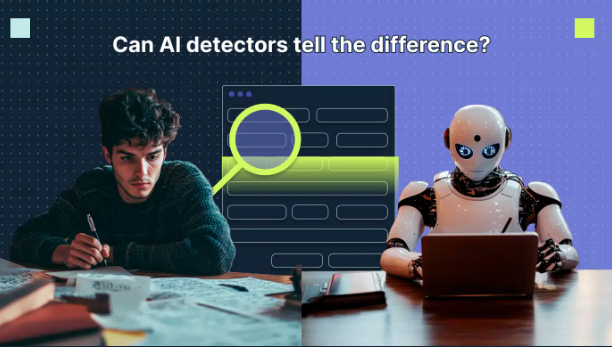
Artificial intelligence has transformed content creation, making it faster and more accessible than ever. However, this rapid growth has also created a new challenge: distinguishing between human-written and AI-generated text. As a result, AI detection tools and GPT zero-shot detectors have become essential for educators, publishers, and businesses that want to verify content authenticity.
What Are AI Detection Tools?
AI detection tools are designed to analyze text and determine whether it was generated by a machine. These tools rely on machine learning models trained on large datasets of both human and AI-written content. They examine patterns such as sentence structure, word predictability, and linguistic consistency. Popular detectors often use statistical methods like perplexity and burstiness—metrics that measure how predictable and varied a piece of text is. Human writing tends to be more irregular, while AI-generated content often follows smoother, more predictable patterns.
Understanding GPT Zero-Shot Detectors
GPT zero-shot detectors take a different approach. Instead of relying heavily on pre-trained classification models, they use zero-shot learning techniques. This means the model can evaluate text without needing task-specific training data. It leverages its understanding of language to make predictions about whether the content is AI-generated. Zero-shot detectors are more flexible and can adapt quickly to new types of AI-generated text, especially as newer language models evolve.
Key Differences Between the Two
When comparing the two, traditional AI detection tools are generally more stable and easier to use. They provide clear scores and are often integrated into platforms for plagiarism checking or academic review. However, they may struggle to keep up with rapidly improving AI writing systems. GPT zero-shot detectors, while more adaptable, can sometimes produce inconsistent results because they rely on broader language understanding rather than specialized training.
The Technology Behind AI Content Detection
Understanding the technology behind these tools is crucial for making informed decisions. AI detectors typically use classification algorithms trained on labeled datasets, while zero-shot models depend on contextual reasoning and pattern recognition. Both approaches have strengths and weaknesses, which is why many experts recommend using multiple tools for verification rather than relying on a single source.
How to Verify Text Authenticity
For users who want to verify text authenticity, there are several best practices to follow. First, always run the content through more than one detection tool to compare results. Second, manually review the text for signs of AI generation, such as overly generic phrasing or lack of personal insight. Third, consider the context—AI-generated content often lacks depth in highly specialized or emotional topics.
Additionally, combining AI detection with plagiarism checks and fact verification can provide a more comprehensive evaluation. For example, using a reliable AI detection platform like https://aidetector.ac alongside other tools can help ensure both originality and authenticity.
Conclusion
Both AI detection tools and GPT zero-shot detectors play an important role in today’s digital landscape. While no system is perfect, understanding how these technologies work allows users to better evaluate content and maintain trust in written communication. For more advanced verification, platforms such as https://aidetector.ac offer practical solutions to assess whether content is human-written or AI-generated.