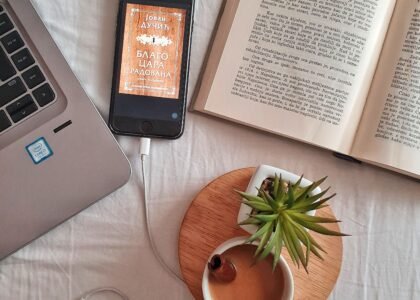

The Goodreads app is a free reading-tracking and book-discovery app that lets you organize books, rate and review what you read, follow other readers, set reading goals, and get personalized recommendations. It remains useful in 2026, especially if you value Goodreads’ enormous community and review database, but readers who want detailed statistics, a cleaner interface, or deeper reading-session tracking may prefer newer alternatives.
Goodreads launched in 2007 and is now owned by Amazon. Its official service describes it as a platform for discovering books, tracking reading, and connecting with other readers. Goodreads official About page
The interesting question in 2026 is not simply whether Goodreads works. It does. The better question is whether its particular mix of cataloging, reviews, social features, and Amazon integration still matches the way you read.
What the Goodreads App Is Actually Good At
The biggest strength of the Goodreads app is its combination of scale and simplicity.
You can search for a book, add it to Want to Read, mark it as currently reading, or move it to Read when you finish. You can also give it a rating, write a review, follow friends, browse updates, and use recommendations to find your next book.
That sounds basic, but the size of the underlying catalog changes the experience. When you search for an obscure title, an older edition, or a book that has been out for years, Goodreads often has enough community data to make the result useful.
The app is also free. Goodreads describes its service as free, while its core features include bookshelves, reviews, recommendations, and reading tracking. Goodreads official service information
One practical feature that remains particularly useful is the barcode scanner. Goodreads introduced barcode scanning for its Android app so readers could scan physical books and quickly find their Goodreads information, reviews, and details. Goodreads barcode scanner information
The Core Features You Will Use Most
The Goodreads app works best when you treat it as a combination of personal bookshelf and social reading network.
| Feature | What it does | Best for |
|---|---|---|
| Bookshelves | Organizes books into reading categories | Keeping your library organized |
| Ratings & Reviews | Lets you rate and review books | Sharing opinions and checking reader reactions |
| Reading Challenge | Tracks your yearly reading goal | Building reading consistency |
| Recommendations | Suggests books based on your interests | Discovering what to read next |
| Barcode Scanner | Finds books by scanning their barcode | Checking physical books quickly |
| Social Features | Lets you follow readers and interact | Readers who enjoy a community |
Shelves
Shelves are the foundation. The standard workflow is simple:
- Want to Read
- Currently Reading
- Read
You can also create custom shelves for genres, authors, rereads, book-club lists, or almost anything else you want to organize.
For someone with several hundred books, this becomes more useful than it sounds. Instead of trying to remember why you saved a title six months ago, you can create shelves around specific interests and return to them later.
Ratings and Reviews
Goodreads uses a five-star rating system. You can rate a book without writing a review, or add a longer review explaining what worked or did not work for you.
The advantage is volume. Popular titles can have huge numbers of ratings and reviews, so you can often get a quick sense of how other readers responded before committing several hours to a book.
The disadvantage is that large communities are noisy. A highly rated book is not automatically right for you, and controversial releases can attract reviews driven by hype, fandom, or disagreement rather than the actual reading experience.
That is why I would treat the average rating as a starting signal, not a buying decision.
Reading Challenge
The annual Reading Challenge is another reason many readers keep using Goodreads.
You choose how many books you want to read during the year and track progress against that target. Goodreads also supports additional reading challenges and community activities.
For casual readers, this is enough motivation. You do not need a complicated habit system. You simply see that you have finished 18 of your planned 30 books and know you are behind or ahead.
Where the App Starts to Feel Limited
The biggest weakness of the Goodreads app is not that it lacks every modern feature. It is that several competing apps now do certain jobs more deeply.
Reading statistics are a good example.
Goodreads can tell you what you have read and help you track goals, but it is not primarily designed as a detailed analytics dashboard. If you want to explore reading moods, pace, page counts, formats, genres, or patterns across your reading history, a dedicated tracker can feel much more informative.
This difference explains why readers continue to look for newer book-tracking platforms. Our guide to Goodreads alternatives compares other options for readers who want different combinations of tracking, discovery, and reading features. Goodreads Alternatives: 7 Best Book Tracking Apps and Platforms
There is also the interface question.
Some readers are perfectly comfortable with Goodreads’ familiar layout. Others find it less modern than newer reading apps. That does not mean every reader should leave Goodreads. It means the app’s strongest advantage is increasingly its network and database rather than having the most sophisticated reading-tracking experience.
Goodreads and Kindle Work Better Together Than You Might Expect
One area where the Goodreads app still has a meaningful advantage is its relationship with Amazon and Kindle.
Goodreads officially supports linking an Amazon or Kindle account. Once connected, eligible Kindle books can be added and rated on Goodreads, and Kindle reading activity can contribute to Goodreads reading tracking. Goodreads also allows users to revisit and share Kindle notes and highlights through the connected experience. Goodreads Kindle integration
This matters if most of your reading happens through Kindle.
Imagine buying an ebook on Amazon, reading it on your Kindle, and then wanting your reading history and review activity to remain connected. Goodreads is naturally positioned for that workflow.
It is less compelling if you deliberately want to keep your reading life separate from Amazon’s ecosystem.
That is an important distinction. The best app depends partly on what you are already using.
How Good Are Goodreads Recommendations?
Recommendations are one of the most visible parts of the Goodreads app, but they are also an area where expectations should be realistic.
Goodreads says its recommendation system uses billions of data points to provide suggestions tailored to readers’ literary tastes. Goodreads recommendation information
In practice, recommendations can be useful for discovering books related to authors, genres, and titles you already like. But personalization is not the same as understanding your current mood.
For example, someone who normally reads fantasy may occasionally want a short mystery. A recommendation system built heavily around historical preferences can keep serving the fantasy signal even when the reader wants something completely different.
This is one reason mood-based systems have attracted attention. Some newer reading platforms put more emphasis on mood, pace, and reading characteristics rather than relying mainly on previous ratings and shelves.
So Goodreads recommendations are useful, but I would not make them the sole reason to choose the platform.
Goodreads vs. StoryGraph: The Most Important Difference
If you are deciding between Goodreads and StoryGraph, the simplest distinction is this:
Goodreads is stronger as a large social book database, while StoryGraph is stronger as a personal reading analytics tool.

That difference affects almost everything.
| Category | Goodreads | StoryGraph |
|---|---|---|
| Large reader community | Strong | Strong |
| Reviews and ratings | Strong | Strong |
| Social reading | Strong | Moderate |
| Reading statistics | Basic | More detailed |
| Mood-based tracking | Limited | Stronger |
| Reading-pattern analysis | Basic | Stronger |
| Amazon/Kindle connection | Strong | Different approach |
| Best suited for | Community and discovery | Personal analytics |
Goodreads is attractive if you want:
- A huge community
- Lots of reviews
- Friends and followers
- Popularity signals
- Amazon and Kindle connections
- A long-established book catalog
- Free basic tracking
StoryGraph becomes more attractive if you want:
- Detailed reading statistics
- Mood and pace information
- More granular rating options
- Reading-pattern analysis
- A more data-focused experience
If you are specifically searching for alternatives, our book-tracking platforms guide gives you a broader look at other tools worth considering. Goodreads Alternatives and Book Tracking Platforms
What About Privacy and Social Features?
Social interaction is a major part of the Goodreads experience.
You can follow readers, see what friends are reading, interact with reviews, join groups, and participate in book-related discussions. Goodreads’ terms also explain that registered users can create bookshelves, post reviews, and comment on other members’ reviews. Goodreads Terms of Use
That can be a strength or a distraction.
If your motivation improves when friends can see your reading progress, Goodreads makes sense. If you want a private personal log with minimal social activity, a quieter tracker may feel better.
This is one of those cases where there is no universally correct answer.
A reader who loves sharing every five-star read may consider Goodreads social features essential. Another reader may only want a private list of books they finished.
Is the Goodreads App Free?
Yes. Goodreads describes itself as a free service, including its Kindle integration pages. Goodreads free service and Kindle integration
That makes the comparison with paid reading trackers slightly different.
A paid app may offer better statistics, timers, habit features, or a cleaner interface, but you are paying for a specialized experience. Goodreads gives you a large ecosystem without requiring a subscription for its basic reading-tracking functions.
For someone who only wants to catalog books, rate them, write reviews, and maintain a reading goal, paying for another app may not provide enough additional value.
A Realistic Workflow for Using Goodreads in 2026
You do not have to choose between every reading platform.
A practical setup can be surprisingly simple.
Use Goodreads as your broad book database and social review network. Keep your Want to Read shelf there, especially if your friends and favorite reviewers are already active.
Then, if you care about statistics, use a second tool for deeper analysis.
This two-tool approach can work well when each platform has a different job. For example, you might discover a book through Goodreads reviews, save it to your shelf, read it on Kindle, and then use another tracker to analyze your reading habits.
The downside is duplicate data entry.
If you hate maintaining the same information in two places, stick with one platform. The “perfect” feature list is not worth the extra administration.
Who Should Still Use Goodreads?
The Goodreads app is still a good choice if you identify with several of these:
You regularly check reviews before buying books.
You have friends who actively use Goodreads.
You enjoy annual reading challenges.
You want one large catalog rather than a niche reading tracker.
You read frequently through Kindle or Amazon.
You want a free service rather than another subscription.
You do not need advanced reading analytics.
For these readers, switching platforms may create more inconvenience than benefit.
The fact that newer apps exist does not automatically make Goodreads obsolete.
Who Should Consider Moving Away?
You should seriously investigate alternatives if your main complaint is that you want more information about your own reading.
If you want charts, detailed reading statistics, mood tracking, pace analysis, more flexible ratings, or a more modern interface, Goodreads may feel too basic.
The same applies if the social layer does not interest you. You may prefer an app designed around private tracking rather than a large public community.
And if you are tired of entering information manually, check how each alternative handles importing your existing Goodreads library before switching. Migration quality can be more important than the feature list on the homepage.
Frequently Asked Questions
Is the Goodreads app still worth using in 2026?
Yes, especially if you value its large review community, established book database, social features, Reading Challenge, and Amazon/Kindle connections. It is less compelling for readers who primarily want detailed analytics or a modern personal-tracking experience. In that case, newer reading trackers are worth comparing.
Is Goodreads free?
Yes. Goodreads describes itself as a free service. Its core functions include book tracking, recommendations, reviews, shelves, and reading goals. Goodreads official service information
Can Goodreads track Kindle books?
Yes. Goodreads provides an account-linking workflow for Amazon and Kindle. Eligible Kindle reading activity can be connected to Goodreads, including adding books, tracking reading, and working with notes and highlights. Goodreads Kindle integration
Does Goodreads have a barcode scanner?
Yes. Goodreads has supported barcode scanning in its mobile apps, allowing readers to scan physical books and quickly find their Goodreads information. The feature is particularly useful in bookstores or libraries when you want to check reviews before adding a book to your shelf. Goodreads barcode scanner information
Is StoryGraph better than Goodreads?
It depends on what you want. StoryGraph is generally better suited to detailed reading statistics, mood-based tracking, and reading-pattern analysis. Goodreads remains stronger for its large community, extensive review ecosystem, and Amazon/Kindle connections. Neither is objectively better for every reader.
The One Test I Would Run Before You Switch
Before deleting your Goodreads account or moving hundreds of books, test one month of your actual reading workflow.
Track five books from discovery through completion. Note how long it takes to find each title, add it to your library, update progress, rate it, write a review, and find the next book.
Then ask one simple question: Which app makes the actions you personally repeat every week easier?
That test is more useful than comparing twenty feature boxes.
A reading tracker is not valuable because it has the longest feature list. It is valuable when you actually keep using it. If Goodreads takes you 30 seconds to record a finished book and another app takes two minutes but gives you prettier statistics, the statistics may not be worth the extra friction.
For most readers, the best choice in 2026 is therefore not “Goodreads versus every alternative.” It is choosing the tool that fits the part of reading you want technology to improve.
One actionable takeaway: Before switching platforms, export or preserve your Goodreads library and test the alternative with 5 to 10 books first. If the new tool saves you time on the tasks you actually perform, then migrate. If not, Goodreads may still be the better fit.