

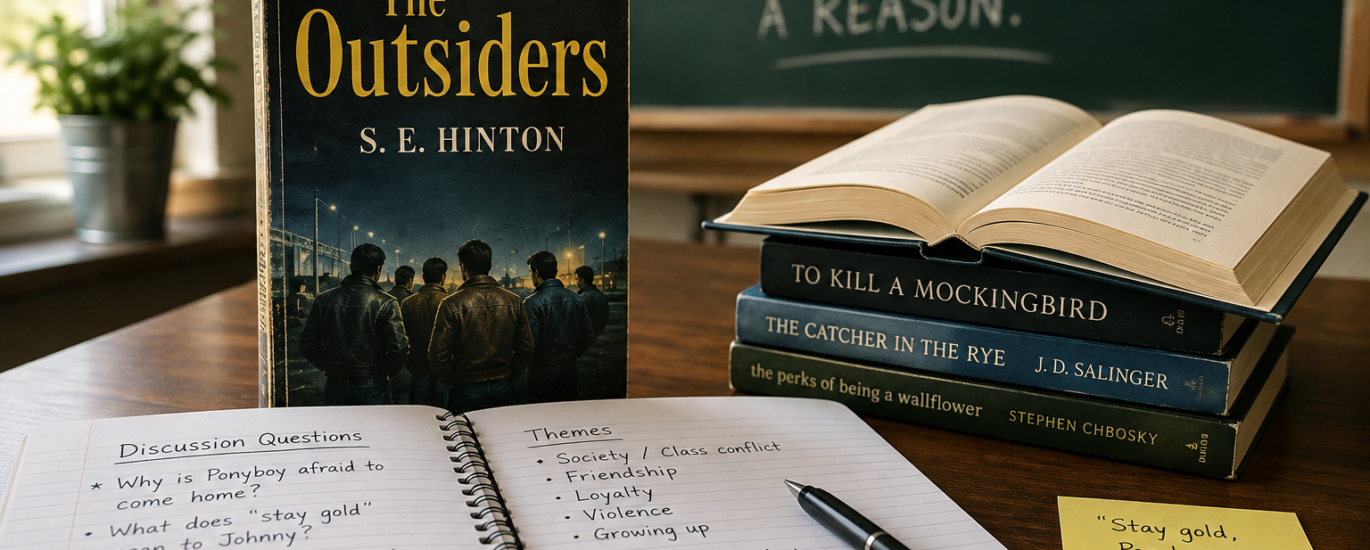
The Outsiders remains a widely discussed coming-of-age novel because of its themes of identity, social class, friendship, family, and belonging. These discussion questions are organized by chapter, theme, and character to help students explore the story more deeply and support their answers with evidence from the text.
The single most useful discussion question for this novel is also the simplest one: by the end of the book, has Ponyboy actually changed, or has his situation just changed around him? Everything else below builds toward being able to answer that with real evidence from the text, not just a gut feeling.
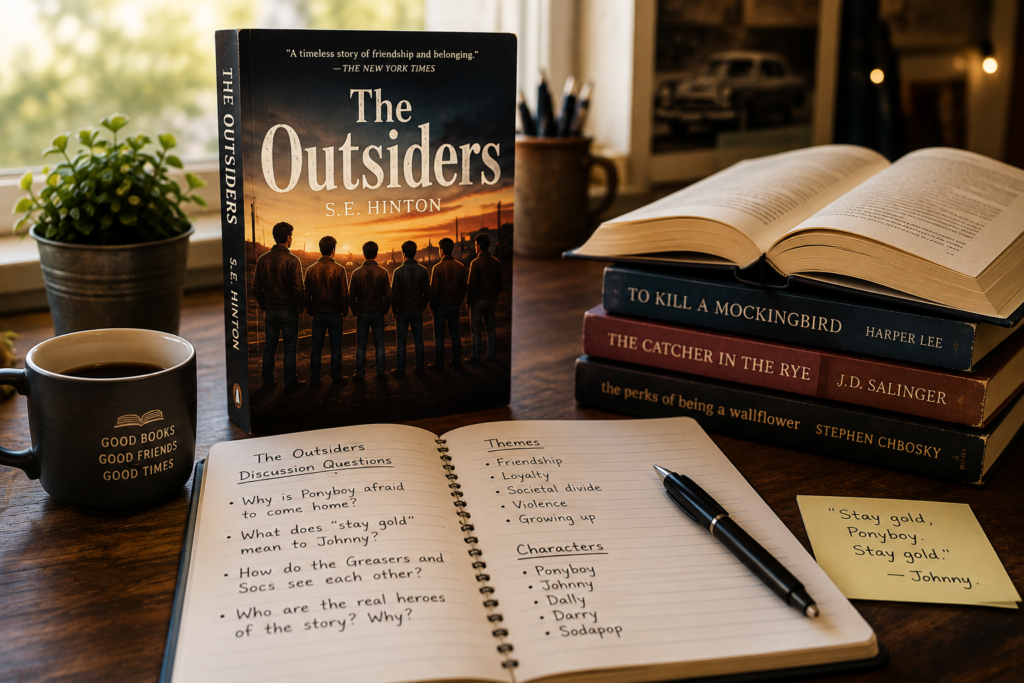
Why This Novel Still Generates Real Discussion
Hinton was fifteen when she started writing, still a student at Will Rogers High School in Tulsa, and eighteen when the book was published in 1967. She has said she got a D in her own creative writing class that year because she was too busy working on the manuscript instead of the assigned work, a detail that tends to land well with students who assume adults never struggled with school either. Her first royalty check, after Viking signed her for a $1,000 advance, was for twelve dollars.
That backstory matters for discussion because it changes how students read the voice. Ponyboy is fourteen, and the person writing him was barely older. The book has sold more than 14 million copies since 1967, which is a real signal that the class divide she wrote about, not just the plot, still resonates outside 1960s Tulsa.
Chapters 1 Through 4: Setting Up the Divide
These early chapters establish the greasers and the Socs before the plot’s central tragedy. Good discussion here focuses on how much information Hinton gives the reader before anything violent happens.
- Ponyboy lists what separates a greaser from a Soc in the first few pages. Which of those differences are about money, and which are about attitude or reputation? Can a person move between the two groups, or is a person just born on one side?
- Darry hits Ponyboy after he comes home late. Ponyboy says it’s the first time Darry has ever hit him. Why does Ponyboy run to Johnny instead of staying to talk it out, and what does that choice say about how the brothers actually communicate?
- Cherry Valance, a Soc, tells Ponyboy that “things are rough all over,” meaning her life has real problems too despite her money. Do you believe her? What would change your mind either way?
- Bob Sheldon is introduced mostly through what other characters say about him before readers see much of him directly. What does that method of introduction do to how a reader judges him later?
Chapters 5 Through 8: The Church, the Fire, and What Loyalty Costs
This middle section is where the personal connection questions get the most traction, since Ponyboy and Johnny are physically removed from both gangs and forced to sit with what happened.
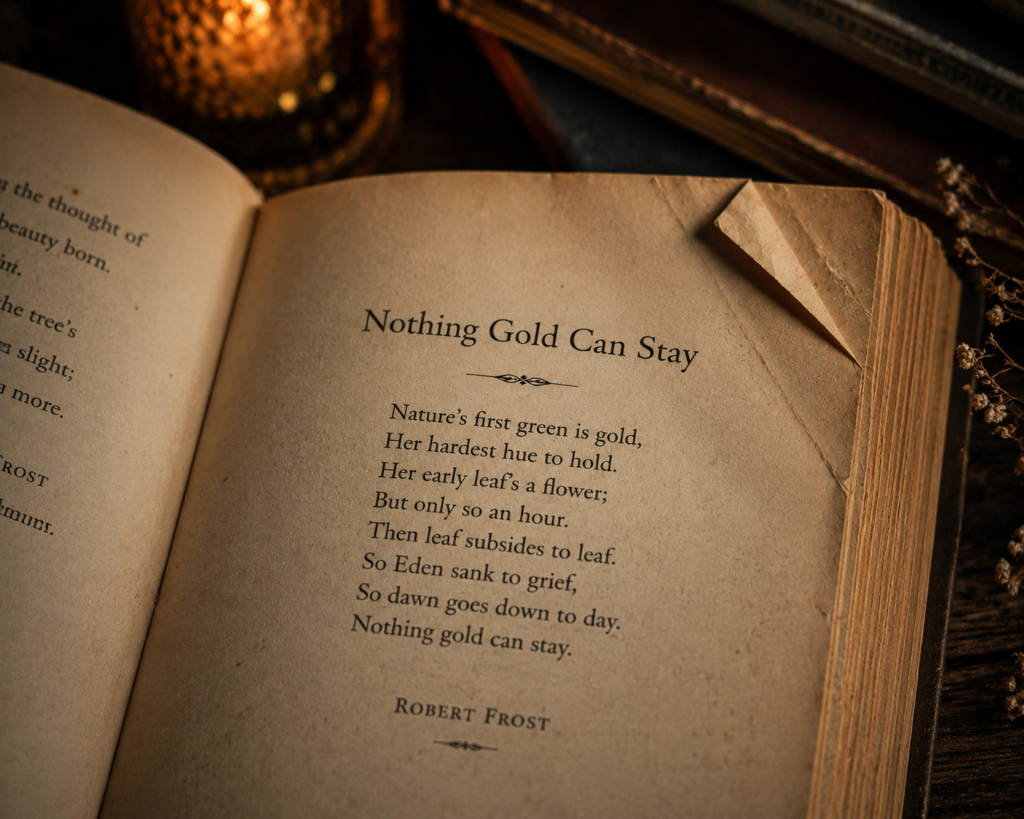
- Ponyboy reads Gone with the Wind aloud to Johnny while they’re hiding out, and later they discuss Robert Frost’s poem “Nothing Gold Can Stay” together. Why do you think Hinton chose to build this specific bond around literature instead of, say, music or sports?
- Johnny tells Ponyboy to “stay gold,” echoing the poem’s idea that beautiful or innocent things don’t last. What do you think Johnny means by it in the moment, and does that meaning shift by the time you finish the book?
- Dally gives the boys money and a loaded gun before sending them into hiding. What does that decision reveal about how Dally sees the world, compared with how Darry or Soda see it?
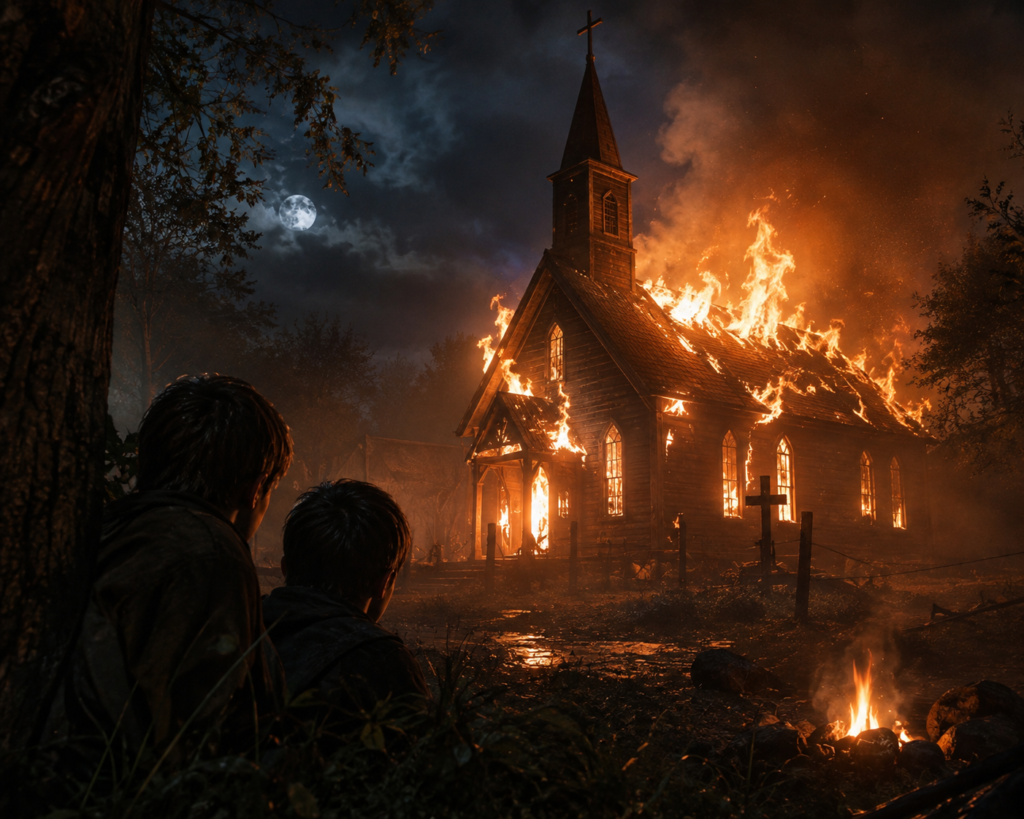
- When the church catches fire and Ponyboy, Johnny, and Dally run back inside to save the children trapped there, all three get treated as heroes by the newspapers. Is that label earned, given what led them to the church in the first place? Can someone be a hero and a fugitive in the same week?
Chapters 9 Through 12: The Rumble and Its Aftermath
By this point most classes have strong opinions, and this is where questions should push students to weigh actions against consequences rather than just recap plot.
- The greasers win the rumble against the Socs, but Ponyboy narrates it as an empty victory. What did the fight actually settle, if anything?
- Johnny dies believing the fight and everything before it “was worth it” because it saved the children in the church. Do you agree with his own assessment of his short life?
- Dally’s reaction to Johnny’s death leads directly to his own death by the police. Was that outcome inevitable once Johnny died, or did Dally have other choices in that moment?
- Ponyboy ends the novel by writing the theme his English teacher assigned, and the reader realizes the essay is the book itself. What does that structural choice suggest about who Ponyboy is writing for: his teacher, himself, or the reader?
Theme-Based Questions for a Shorter Discussion
If there isn’t time to go chapter by chapter, these five questions work as a standalone discussion and touch every major theme in the book.
- Class conflict between greasers and Socs drives most of the plot. Is the real dividing line in the book money, or is it closer to how each group is allowed to grieve and express pain in public?
- Nearly every adult in the novel is absent, dead, or unreliable. How would the story change if even one adult character had stepped in early and stayed involved?
- Violence in the book is constant but rarely glamorized the way some later media portrays gang conflict. What specific scenes make the violence feel like a cost rather than a thrill?
- The novel is narrated entirely by Ponyboy. What is one moment where you wanted to hear a different character’s version of events, and why?
- Hinton wrote this book as a teenager herself. Does knowing that change how much authority you give the novel’s portrayal of teenage life, compared with an adult-written coming-of-age story?
Questions for After the Book Is Finished
- If you could ask S.E. Hinton one question about how the story ends, what would it be, and why did the book leave that particular thing unanswered?
- The 1983 film adaptation, directed by Francis Ford Coppola and starring C. Thomas Howell, Matt Dillon, and Ralph Macchio, is fairly faithful to the book. If you’ve seen it, what’s one moment that worked better on the page than on screen, or the reverse?
- Would this story work if it were set today instead of the mid-1960s? What details would have to change, and what would probably stay exactly the same?
A Note for Teachers and Group Leaders
Not every question here needs a full class period. In practice, the chapter-by-chapter sets work best as short warm-up discussions right after each reading assignment, while the theme-based set works better as a single wrap-up conversation once the whole book is done. Mixing a plot-recap question with an opinion question in the same round tends to keep quieter students talking, since the recap question gives them something factual to contribute before the harder interpretive question comes around.
One thing worth flagging honestly: some of these questions, especially the ones about violence and dead or absent parents, can land differently depending on a student’s own home situation. It’s worth reading the room before pushing hard on the “why are the adults absent” thread with a younger or more vulnerable group.
Frequently Asked Questions
Is The Outsiders based on a true story?
Not directly, but Hinton has said the greaser-versus-Soc divide was based on real social lines at her Tulsa high school, and the plot was partly inspired by a friend who was beaten up for being a greaser.
What grade level is The Outsiders usually taught at?
It’s most commonly assigned in grades 7 through 9, though some high school classes use it as an entry point into coming-of-age literature before moving to more complex texts.
How many chapters does The Outsiders have?
Twelve. Most discussion guides, including the ones from Education.com and other teaching resource sites, split the book into three sections of four chapters each for pacing.
What does “stay gold” actually mean in the book?
It comes from Robert Frost’s poem “Nothing Gold Can Stay,” which argues that the most valuable, innocent things fade fastest. Johnny tells Ponyboy to stay gold, meaning don’t let the world harden you the way it hardened him and Dally.
Why did S.E. Hinton publish under her initials instead of her full name?
Her publisher worried male teenage readers would dismiss a violent story about boys if they knew it was written by a young woman, so Susan Eloise Hinton became S.E. Hinton on the cover, a choice she has said she never minded.
The Question Most Guides Skip
Most discussion guides ask students whether Ponyboy changes by the end of the book. Almost none of them ask the harder follow-up: if Ponyboy hadn’t been assigned that theme paper by his English teacher, would he have processed what happened at all, or just buried it the way Dally clearly buried whatever he went through before the novel even starts? That single follow-up question tends to produce the most honest classroom conversation of the whole unit, because it forces students to talk about coping, not just plot.