
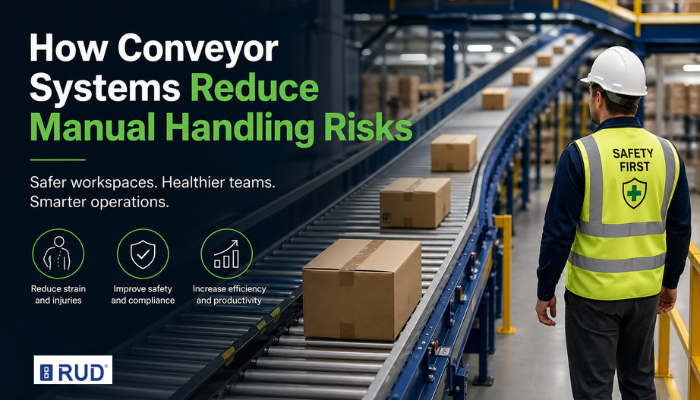
Conveyor systems cut manual handling risks by removing workers from repetitive lifting, carrying, and material movement tasks that cause most workplace injuries.
If you’re running an industrial site in Australia, you already know the drill. Workers lift materials by hand, backs give out down the track, and compensation claims add up quickly. And every injury means lost time, insurance headaches, and scrambling to keep operations running while someone recovers.
RUD Engineering has spent over 40 years helping Brisbane and Queensland sites replace risky manual handling with material handling systems built for heavy industrial work. So we’ve seen what happens when businesses wait too long to make the switch.
This article breaks down how conveyor systems protect workers while keeping production moving. Let’s begin by looking at what makes manual handling so risky.
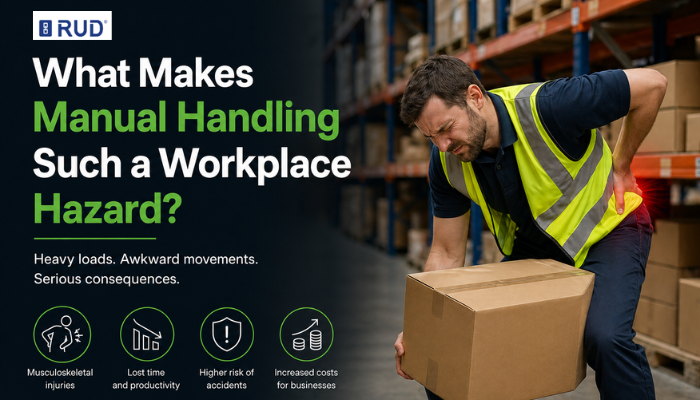
What Makes Manual Handling Such a Workplace Hazard?
Body stress from manual handling causes 37% of serious workplace injury claims across Australian industrial sites each year. Workers lift, bend, and carry materials day after day, and the damage builds up whether anyone notices it or not.
Let’s look at why this keeps happening:
- Repetitive Lifting Strains the Lower Back Over Time: Lifting the same material loads creates constant pressure on lumbar discs and back muscles. One lift won’t do it, but hundreds of lifts per shift add up to long-term musculoskeletal disorders that keep people off the job for weeks or months.
- Poor Posture Increases Shoulder and Joint Injuries: When your crews twist while carrying loads or reach above shoulder height to move material, the body gets pushed into positions it wasn’t built to hold. Shoulder injuries and chronic pain follow because awkward angles put stress on joints that can’t handle the strain long-term.
- Fatigue Drops Concentration and Raises Accident Risk: Continuous manual tasks like loading trucks and shifting pallets wear people down as the shift drags on. Once fatigue sets in, concentration slips. And that’s when accidents happen on industrial sites where one mistake can mean serious injury.
So what’s the alternative when your operation can’t just stop moving materials?
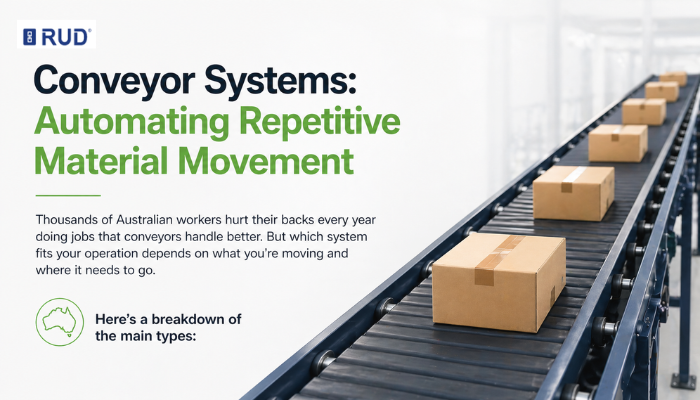
Conveyor Systems: Automating Repetitive Material Movement
Thousands of Australian workers hurt their backs every year doing jobs that conveyors handle better. But which system fits your operation depends on what you’re moving and where it needs to go.
Here’s a breakdown of the main types:
How Belt Conveyors Handle Bulk Materials
Belt conveyors move materials along a continuous loop without anyone lifting or carrying a thing. You’ll find them running in warehouses and factories across Brisbane doing the repetitive work that wears people down.
The belt runs between two pulleys in a constant loop. Workers load materials at one end, and the belt moves everything through to the other end; no one touches the load during transport. That means your crew can focus on work that actually needs decision-making instead of hauling boxes and cartons back and forth all shift.
What’s more, speed controls let you match the belt to your production rate. For example, you can slow it down for fragile items and speed it up when volumes are high (no more workers standing around waiting or rushing to keep pace).
Apron Feeders for Heavy-Duty Applications
Sometimes a belt just won’t cut it, and that’s exactly when you need an apron feeder. These systems use a different approach. Steel pans mounted on heavy-duty chains carry materials that would rip a standard belt to shreds.
The setup works like this: A hopper feeds material onto the apron feeder at the loading point, and the pans move it forward without anyone shovelling or repositioning by hand. The system handles ore, coal, and crushed rock, moving it even when chunks vary from dust to the size of your fist.
After years of working with Queensland mining sites, we know what harsh conditions do to equipment. Dust gets everywhere, moisture wrecks components, and vibration shakes things apart. But apron feeders keep running where lighter systems fail within weeks.
Screw Conveyors in Confined Spaces
The screw conveyor has a rotating helical blade inside a sealed tube that pushes materials (grain, powder, whatever bulk product you’re handling) forward as it spins. It moves through spaces that would be dangerous for manual work. So workers never need to climb into confined areas or reach into awkward spots to keep things flowing.
And the tube around the screw creates a sealed path from start to finish. This keeps operators separated from hazardous materials, dusty substances, or products that need contamination control. Because of this, food processing facilities use these (hygiene standards won’t allow open handling). Chemical plants also use them because exposure means injury.
Since screw conveyors run at steep angles or vertically to move material between levels, your workers don’t haul loads up stairs. Better yet, your crew doesn’t wreck their backs lifting to elevated feed points. The system does the vertical work while people stay at ground level, where it’s safe.
How Automation Solutions Cut Down Injury Rates
Automation systems remove workers from high-risk tasks and shift physical strain onto mechanical systems designed for repetitive loads. As a result, injury rates drop as people aren’t doing the jobs that break them down over time.
Automation takes over lifting, carrying, and material positioning across the production floor. Meanwhile, workers move to supervisory roles or tasks that need problem-solving instead of brute force.
While automation protects people from the tasks that lead to injury; it also protects your business from the costs that pile up when experienced crew members end up on compensation instead of on-site.
Does Industrial Automation Australia Face Unique Challenges?
Australian industrial sites face distance, climate, and workforce issues that affect how businesses implement automation. The main issues industrial automation Australia deals with include:
- Remote Sites Need Reliable Systems: When your operation sits hours from the nearest major city, you can’t call a service technician every time something breaks down. Remote mining operations require automation that keeps running with minimal on-site support.
- Queensland Heat Destroys Standard Equipment: Components that work fine in controlled environments fail quickly when exposed to extreme heat and dust. That’s why industrial solutions need ruggedised parts that hold up when temperatures hit 40°C and beyond.
- Labour Shortages Make Automation Essential: Finding enough skilled workers becomes harder each year, and these systems help maintain consistent output when labour is scarce. And it’s getting worse in regional areas where people don’t want to relocate.
But conveyors and automation only cover part of the material handling picture. Some operations need equipment that moves loads vertically or handles underground transport in ways standard horizontal systems can’t manage.
Material Handling Beyond Conveyors
Conveyors handle horizontal movement well, but vertical lifting and underground transport need different equipment altogether. Basically, when material needs to go up or down instead of across, you need systems built for that specific job.
The two main alternatives include:
Bucket Elevators for Vertical Transport
If you want to lift bulk materials vertically without manual hoisting, bucket elevators handle the job continuously. They move grain, aggregates, and other materials straight up without anyone hauling loads between floors.
What’s more, the housing keeps everything contained during the lift. This means dust and spillage stay inside instead of spreading across the work area. So operators nearby aren’t dealing with mess or breathing in whatever’s being conveyed upward.
And here’s another benefit. Material discharges at the top automatically. The buckets tip when they reach the discharge point, and gravity takes over. As a result, nobody climbs to elevated heights to manage the flow or reposition anything.
Drag Chain Conveyors in Mining Operations
Drag chain conveyors pull heavy material through enclosed troughs. That’s why mining operations across Queensland use these where conditions would wreck lighter systems within weeks.
The way it works is straightforward: Chains mounted in the trough drag material forward as they move. So there’s no need for manual shovelling and repositioning. The material stays in the channel, and workers stay clear of the moving components and whatever abrasive load is being conveyed through.
Based on our experience, we’ve found that floor-level systems work better than elevated ones. Since drag chain conveyors sit at or below ground level, workers don’t trip over raised equipment blocking pathways on busy floors.
Better yet, the cover keeps moving parts away from people while the material stays contained during transport. So operators don’t come near sharp edges, pinch points, or loads that would cause injury if handled directly.
When Should You Consider Industrial Robotics?
Industrial robotics makes sense when tasks involve precise repetitive movements or hazardous environments where human presence increases risk.
You might see them in:
- Automotive assembly lines that require components to be placed within millimetres.
- Pharmaceutical manufacturing, where contamination from human contact could ruin entire batches.
- Beverage facilities that handle cans on high-speed production lines.
But remember, robotics work differently from conveyors or material handling systems. They excel at variable tasks that change based on the product moving through the manufacturing process. When your operation needs that level of control, and your current setup can’t deliver it, robots fill the gap.
Making the Switch: What Your Site Actually Needs
Choosing the right material handling system starts with understanding your current injury patterns and site constraints. A conveyor system that works for one operation might be completely wrong for another.
To make the right choice, assess current manual handling injury rates and calculate what compensation claims actually cost your business. The numbers show where automation systems deliver the best return by pulling people out of high-risk tasks.
Contact RUD Australia to discuss customised solutions for your Brisbane or regional Queensland operation. The team helps you choose reliable equipment that matches your site, budget, and maintenance capabilities.