

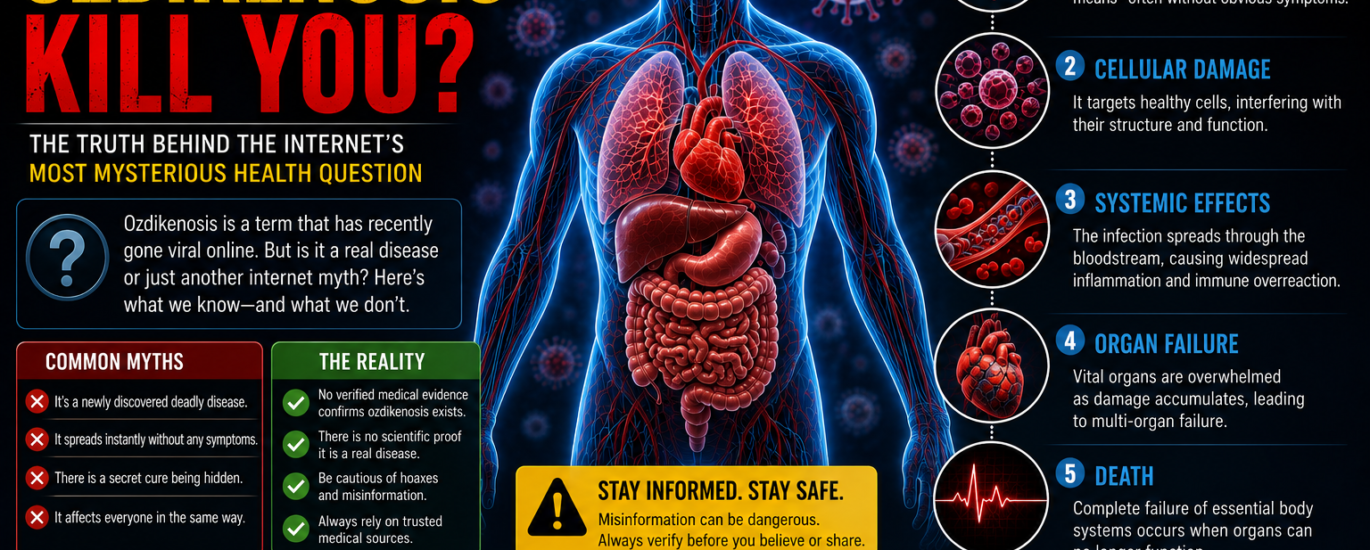
The internet is filled with unusual search trends that emerge seemingly out of nowhere. Some involve real events, while others revolve around mysterious phrases that spark curiosity and debate. One such phrase is why does ozdikenosis kill you. The question sounds serious and medical, leading many people to wonder whether ozdikenosis is a dangerous disease, a scientific phenomenon, or something entirely different.
As more users encounter the term online, interest continues to grow. However, one of the most unusual aspects of ozdikenosis is the lack of reliable information surrounding it. Unlike recognized illnesses that have extensive medical documentation, ozdikenosis appears to exist largely as an internet mystery.
This article explores the possible reasons behind the popularity of why does ozdikenosis kill you, examines what is known about the term, and discusses why careful research is essential when dealing with unfamiliar health-related topics.
The Internet’s Fascination With Unexplained Topics
People are naturally attracted to mysteries. Questions without obvious answers often generate more interest than topics that are already well understood.
The phrase why does ozdikenosis kill you is a perfect example of this phenomenon. It combines a scientific-sounding term with a dramatic question about mortality. This combination encourages curiosity because readers immediately want to know what ozdikenosis is and whether it poses any real threat.
When answers are difficult to find, interest often increases rather than decreases. The mystery itself becomes part of the attraction.
This is one reason why unusual phrases can spread rapidly through search engines, social media platforms, and online discussions.
Why the Name Appears Medical
One reason the question why does ozdikenosis kill you sounds believable is because the word resembles genuine medical terminology.
Many diseases have names derived from Greek or Latin roots. These names often include suffixes that indicate conditions, disorders, or biological processes. Ozdikenosis follows a similar pattern, giving it an appearance of scientific legitimacy.
Most people are not familiar with every medical term in existence. As a result, they may assume ozdikenosis belongs to the same category as recognized illnesses.
This linguistic similarity contributes significantly to the curiosity surrounding the topic.
Searching for Evidence
When investigating why does ozdikenosis kill you, one of the first steps is examining medical literature and healthcare databases.
Established diseases are typically documented in scientific journals, medical textbooks, and healthcare reference materials. Researchers study these conditions extensively to understand their causes, symptoms, and treatments.
At present, there is no widely recognized medical evidence supporting the existence of ozdikenosis as a documented disease. Searches of mainstream healthcare resources do not reveal substantial scientific research connected to the term.
This lack of evidence is important because legitimate medical conditions generally leave a significant research footprint.
Without documented studies, claims about ozdikenosis remain unverified.
Could Ozdikenosis Be Fictional?
One possible explanation for why does ozdikenosis kill you is that the term originated in fiction.
Authors, game developers, filmmakers, and content creators often invent diseases to support their stories. These fictional conditions are frequently designed to sound realistic, borrowing naming conventions from genuine medical terminology.
Such creations can become surprisingly convincing, especially when they spread beyond their original context.
If readers encounter the term without understanding its source, they may assume it represents a real disease rather than a fictional concept.
This explanation aligns with many similar examples found throughout internet culture.
The Role of Curiosity in Viral Searches
Curiosity is one of the strongest drivers of online behavior.
When people encounter a phrase like why does ozdikenosis kill you, they naturally want to learn more. Even individuals who suspect the term may not be real often continue searching because they want confirmation.
Psychologists describe curiosity as a response to information gaps. When people realize they are missing knowledge, they feel motivated to fill that gap.
The less information available, the stronger the desire to investigate.
This psychological principle helps explain why obscure topics can attract so much attention online.
Fear and the Human Response to Uncertainty
Fear is another factor contributing to the popularity of why does ozdikenosis kill you.
The word “kill” immediately suggests danger. Even if readers know nothing about ozdikenosis, the possibility of a deadly condition captures attention.
Humans are naturally sensitive to potential threats. Throughout history, awareness of danger has been essential for survival.
Today, this instinct often influences how people interact with information. Topics involving health risks tend to generate stronger reactions than neutral subjects.
As a result, questions that imply severe consequences often spread quickly across digital platforms.
How Social Media Amplifies Interest
Social media has transformed the way information spreads.
A phrase such as why does ozdikenosis kill you can gain visibility rapidly if enough users discuss it. Even a small number of posts can trigger widespread curiosity.
Algorithms often prioritize content that generates engagement. Mysterious or controversial topics typically attract comments, shares, and reactions.
This increased interaction boosts visibility, exposing the phrase to larger audiences.
Over time, the popularity of the topic may create the impression that it is important or credible, even if reliable evidence remains scarce.
Understanding Real Disease Mechanisms
To properly evaluate claims related to why does ozdikenosis kill you, it helps to understand how genuine diseases become life-threatening.
Real illnesses cause death by disrupting critical bodily functions. They may impair breathing, damage vital organs, weaken the immune system, interfere with circulation, or affect neurological activity.
Medical researchers identify these mechanisms through extensive observation and scientific analysis.
Because there is no verified medical information about ozdikenosis, there is no documented explanation describing how it would affect the human body.
Without evidence, any claims regarding fatal outcomes remain speculative rather than scientific.
The Difference Between Popularity and Accuracy
A common misconception is that widely discussed topics must be true.
The popularity of why does ozdikenosis kill you demonstrates why this assumption can be misleading. Search volume and online discussion do not automatically validate a claim.
Many internet trends become popular because they are unusual, mysterious, or entertaining—not because they are factually accurate.
Understanding this distinction is essential for evaluating information responsibly.
Reliable conclusions require evidence, not simply widespread attention.
The Importance of Source Evaluation
Source evaluation is a critical skill in the digital age.
When researching why does ozdikenosis kill you, readers should consider where information originates. Is it published by a healthcare organization? Does it cite scientific studies? Are experts involved?
Reliable sources typically provide evidence and transparency regarding their claims.
Unverified content often relies on speculation, assumptions, or anonymous opinions.
Learning to distinguish between these types of information helps prevent confusion and misinformation.
Why Internet Mysteries Continue to Thrive
Internet mysteries remain popular because they combine uncertainty with participation.
People enjoy investigating unusual topics, sharing theories, and discussing possible explanations. The mystery surrounding why does ozdikenosis kill you encourages exactly this type of engagement.
Unlike straightforward facts, mysteries invite interpretation and exploration.
As long as questions remain unanswered, curiosity continues to drive interest.
This dynamic helps explain why certain obscure terms remain visible long after they first appear online.
Critical Thinking in Modern Research
Critical thinking is one of the most valuable tools for navigating digital information.
When encountering unfamiliar topics such as why does ozdikenosis kill you, readers should approach claims with both curiosity and skepticism.
Rather than accepting information immediately, they should ask questions, seek evidence, and compare multiple sources.
Critical thinking encourages informed conclusions rather than emotional reactions.
This approach is especially important when dealing with health-related subjects that may influence public understanding.
Conclusion
The question why does ozdikenosis kill you has become an intriguing example of how internet culture can transform an obscure phrase into a widely searched topic. Although the term sounds scientific and potentially alarming, there is currently no widely recognized medical evidence supporting its existence as a documented disease.
Its popularity reflects the combined influence of curiosity, fear, mystery, and digital communication. The lack of reliable information has only increased public interest, turning ozdikenosis into an ongoing online puzzle.
Ultimately, the story serves as a reminder that evidence matters. By evaluating sources carefully and applying critical thinking, readers can better distinguish between verified information and internet speculation, ensuring a more informed understanding of the topics they encounter online.