


A surf CRM is not a separate app you buy on its own. In almost every case it is a customer-management module built inside a surf school or surf camp booking platform, tracking each surfer’s lesson history, skill level, waivers, and contact details in one profile instead of scattered spreadsheets and inboxes.
That distinction matters more than it sounds. Search “surf CRM” and you will land on generic CRM tools like HubSpot or Zoho, none of which know what a tide window is or why a beginner and an advanced surfer can never share the same lesson ratio. Surf schools rarely need a standalone CRM. They need booking software with a CRM layer built for how surf lessons actually run.
What a Surf CRM Actually Tracks
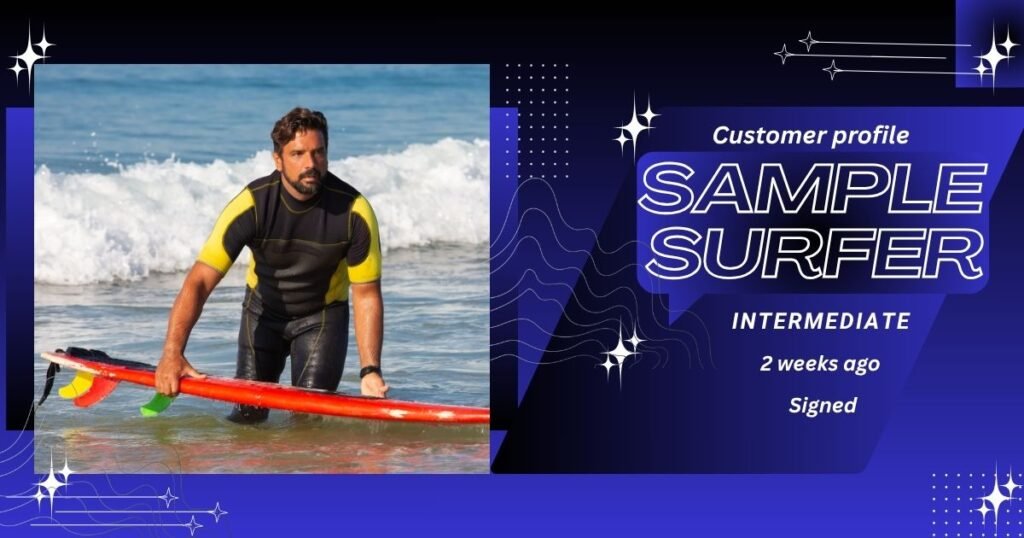
At minimum, a surf-specific CRM keeps a running profile per customer: past lessons, skill level, board and wetsuit size, signed waivers, payment history, and notes an instructor might leave after a session. Bloowatch, for example, builds this around what it calls keeping “booking info, waivers/forms, and customer notes together” so staff on the beach can pull up a repeat guest’s history in seconds rather than digging through email threads.
The more useful platforms go a step further and use that history to drive repeat bookings. Anolla’s approach is a good illustration: its system tailors “the most suitable surf lessons, rental equipment, packages and surf camp programs for every surfer based on their previous bookings, skill level and preferences,” which is really just a surf CRM doing what a hotel loyalty system does remembering the guest so the second visit feels effortless.
One number worth knowing: WaveRez add-ons like damage protection, fuel packages, and delivery upsells typically lift average order value by $25 to $50 per rental when a business has customer history to target them with. That upsell only works if the underlying CRM data is accurate.
Why Surf Schools Can’t Just Use a Generic CRM
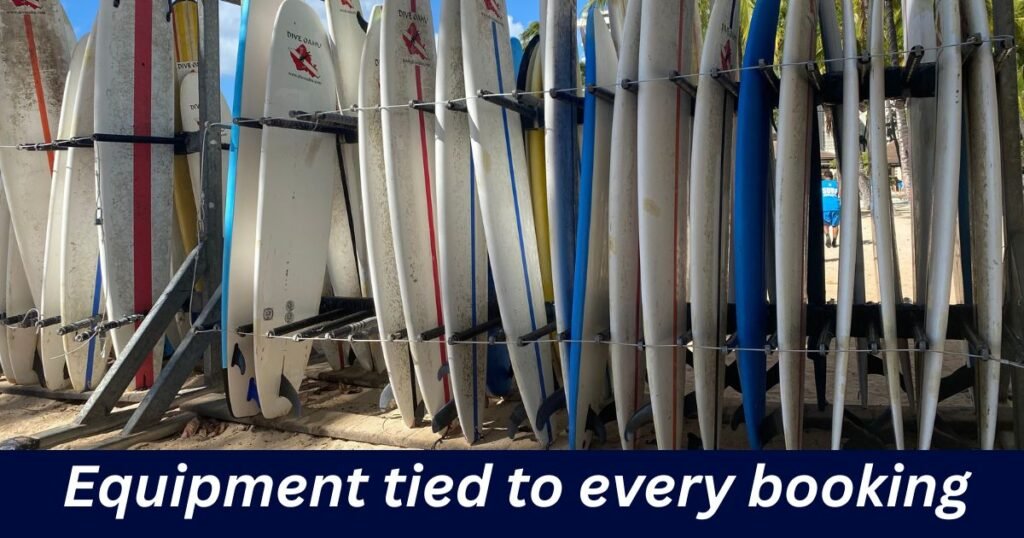
Generic CRMs like Salesforce or HubSpot are built for sales pipelines: leads, deals, follow-up emails. A surf school’s real problem is closer to daily operations than sales funnels. Tide times shift the entire lesson schedule. Instructor-to-student ratios are a safety requirement, not a preference. Equipment (boards, wetsuits, leashes) has to be tracked as inventory alongside the booking, not bolted on afterward.
Bloowatch’s tide-aware scheduling is a direct answer to this gap it lets an operator “build the right windows automatically” around tide conditions rather than manually rebuilding the day’s schedule every time the surf report changes. A generic CRM has no concept of this at all, which is why surf operators who try to run their business on Google Sheets plus a mainstream CRM usually end up duct-taping two systems together and re-entering the same booking twice.
There is a real trade-off here worth being honest about. A dedicated surf CRM will always beat a generic one on industry-specific fields, but it will almost always lose on marketing automation depth, email sequence design, and third-party integrations outside the travel and watersports world. If your surf camp also runs a large email newsletter business or e-commerce store on the side, a hybrid setup (surf booking software plus a marketing CRM feeding into each other) is sometimes the more realistic answer than expecting one tool to do both well.
Surf CRM vs. Standalone Booking Software: The Real Difference
This is where most of the confusion starts. Booking software handles the transaction: a customer picks a lesson time, pays, and gets a confirmation. A surf CRM is what happens after that transaction — it is the memory of the relationship.
In practice, almost none of the serious surf platforms sell these separately anymore. Tashi Travel describes its own approach plainly, offering “one central place to keep your guest’s communication history and trip preferences” bundled directly into its booking system rather than as an add-on. That bundled model has become the norm across the category: Yoplanning, Lueira, and Viking Bookings all fold customer records into the same dashboard used for scheduling and payments, because splitting the two would mean instructors checking two different screens mid-lesson.
Comparing the Main Surf CRM and Booking Platforms
Pricing structures vary a lot in this category, and several vendors only quote pricing after a sales call, so treat the numbers below as a starting point for research rather than a final quote.
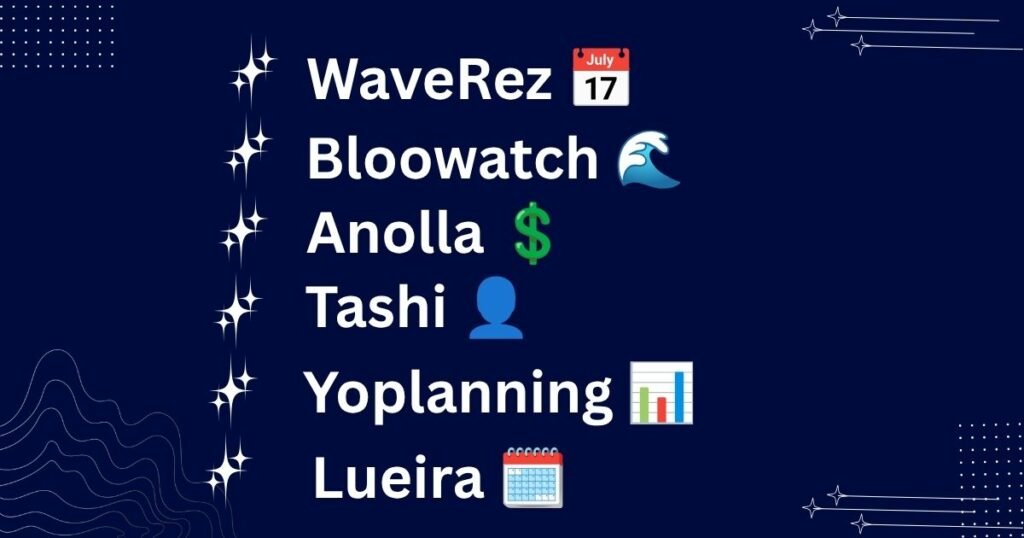
| Platform | CRM depth | Standout feature | Starting cost |
|---|---|---|---|
| WaveRez | Guest profiles, booking history, bulk SMS | Built for the wider watersports industry (boats, jet skis, surf) | $300 one-time setup fee, plus a quoted monthly rate |
| Bloowatch | Customer notes, waivers, payment history in one record | Tide-aware auto-scheduling | Custom quote; 0% booking commission model |
| Anolla | 360° profile with preference-based recommendations | API-first, built-in Stripe payments | Free plan available; paid tiers add automation |
| Tashi Travel | Central communication and preference log per guest | Bundled website builder for direct bookings | Custom quote |
| Yoplanning | Student tracking tied to scheduling | Multi-activity support beyond just surfing | Custom quote |
| Lueira | Order and rental history per customer | Built-in invoicing tied to each booking | Custom quote |
Worth noting: WaveRez was originally built for the broader watersports and boat charter industry, not surfing specifically, so its surf-lesson features sit inside a larger rental and charter toolkit. That is an advantage for a business that also rents kayaks or runs boat tours, and mostly irrelevant weight for a school that only teaches surfing.
What a Surf CRM Actually Costs
Pricing in this category is inconsistent enough that quoting a single number would be misleading. WaveRez lists a $300 one-time implementation fee on review sites, though one Software Advice reviewer described being asked for an additional $5,000 for a custom website build later on a reminder to get every add-on cost in writing before signing. Bloowatch and several competitors instead charge no commission on bookings and monetize through a flat subscription, which tends to suit high-volume schools better than a per-booking cut does.
The honest answer is that most surf CRM pricing depends on lesson volume, number of instructors, and whether you need a booking website built alongside it. Expect a real quote to land anywhere from roughly $50 a month for a small single-location school to several hundred a month for a multi-location operation with resellers and OTA connections.
Common Mistakes Surf Schools Make When Choosing One
A few patterns show up repeatedly in operator reviews:
- Picking on price alone. A cheaper platform that can’t handle tide-based scheduling or instructor ratios will cost more in manual admin time than it saves in subscription fees.
- Ignoring the waiver workflow. If waivers aren’t tied to the same customer profile as the booking, staff end up chasing paper or PDFs separately the exact problem a surf CRM is supposed to solve.
- Not asking about commission structure upfront. Some platforms take a percentage of every third-party booking (Viator, GetYourGuide, and similar channels); others don’t. That difference compounds fast for schools that rely on OTAs for a big share of bookings.
- Assuming it will work for every water sport. A tool built tightly around surfing may not flex well if the business later adds kitesurfing, paddleboarding, or diving. Lueira and Yoplanning are built to flex across multiple watersports from day one; a few of the surf-only tools are not.
How to Actually Test One Before Committing
Most vendors in this space offer a demo or free tier rather than a full trial, so the practical test is to run one real week of bookings through it before switching over. Enter a mix of a group lesson, a private lesson, and an equipment rental, then check whether a repeat customer’s history actually surfaces automatically the second time you book them. If a staff member has to manually search for it, the CRM layer is thinner than the marketing suggests.
Frequently Asked Questions
Is a surf CRM the same as surf school booking software?
Almost always, yes. Nearly every platform in this category bundles CRM features (guest profiles, history, notes) directly into its booking system rather than selling them separately.
Can I use HubSpot or a generic CRM for a surf school instead?
You can, but you will lose tide-aware scheduling, instructor ratio enforcement, and equipment inventory tracking, which a generic CRM was never built to handle.
Do surf CRMs handle equipment rentals as well as lessons?
Most do. WaveRez, Bloowatch, and Lueira all let you attach board and wetsuit rentals to the same booking and customer record as the lesson itself.
How much does a surf CRM typically cost?
It ranges widely, from roughly $50 a month for a small school to several hundred a month for multi-location operators, and several vendors only provide pricing after a sales call.
Does a surf CRM help with repeat bookings? Yes, when the data is actually used. Platforms like Anolla build recommendations directly from a surfer’s past skill level and bookings, which is the main mechanism behind one-click repeat bookings.
One Thing Worth Doing That Most Guides Skip
Before comparing feature lists, pull your last 100 bookings from whatever system you currently use (even a spreadsheet) and count how many were repeat customers versus first-timers. That single number tells you which CRM feature actually matters for your school. A high repeat-customer rate means the preference-based recommendation engines (like Anolla’s) will pay for themselves quickly. A mostly first-timer customer base means tide-aware scheduling and waiver speed (Bloowatch’s strengths) will save you more time than any loyalty feature will.