


In the world of elite sports, no athlete competes alone. From the Premier League to the NBA, the world’s most successful performers rely on a network of scouts, physiotherapists, and tactical analysts to optimize their output. For the modern graduate student in the United States, the “academic arena” is no less competitive. With the rise of interdisciplinary PhD programs and the relentless pressure of “publish or perish,” the smartest students are no longer trying to do it all themselves. Instead, they are adopting a “pro mindset”—treating their research like a high-stakes season and leveraging professional resources to ensure they cross the finish line.
The Graduate Burnout Crisis: Why Support is No Longer Optional
Recent data from the 2024-2025 Healthy Minds Study suggests that while some mental health markers are improving, “flourishing”—the sense of psychological well-being and purpose—has actually dipped. For graduate students, the primary driver of this is cognitive overload.
A typical US graduate student spends approximately 55 hours per week on academic activities. When you add the necessity of “TA-ing” (Teaching Assistantships), lab work, and the looming reality of student debt, the margin for error disappears. Top-tier students recognize that burnout isn’t just a “feeling”—it is a performance-killer that leads to procrastination and, eventually, program attrition.
1. Shifting from “Student” to “Scholar-Executive”
The most successful graduate students operate less like traditional learners and more like executives. They understand that their time is their most valuable asset. If a PhD candidate spends 20 hours struggling with the syntax of a literature review instead of focusing on the methodology of their original research, they are mismanaging their “human capital.”
By utilizing a professional writing service, high-achieving scholars are able to outsource the structural and mechanical “heavy lifting.” This isn’t about avoiding work; it’s about strategic delegation. It allows the researcher to focus on data collection and theory—the parts of the degree that actually move the needle—while ensuring the final manuscript meets the rigorous stylistic standards of American academia.
2. The Psychology of Expert Feedback
In sports, a “second pair of eyes” is vital for correcting a player’s form. In academia, the equivalent is professional editing and scaffolding. Many international students and even native English speakers find the jump from undergraduate “essay writing” to graduate “academic synthesis” to be a massive hurdle.
The move toward seeking outside help is often a search for a model. When a student uses a specialized college essay writing service, they aren’t just looking for a finished product; they are looking for a blueprint. Seeing how a professional academic structures a complex argument or integrates a “theoretical framework” provides a learning tool that many overextended faculty advisors simply don’t have the time to provide.
3. Maintaining Academic Integrity in the Age of AI
One of the biggest “red flags” in modern education is the misuse of Generative AI. While tools like ChatGPT can generate text, they often lack the nuanced, “human-in-the-loop” expertise required for a Master’s thesis or a doctoral dissertation.
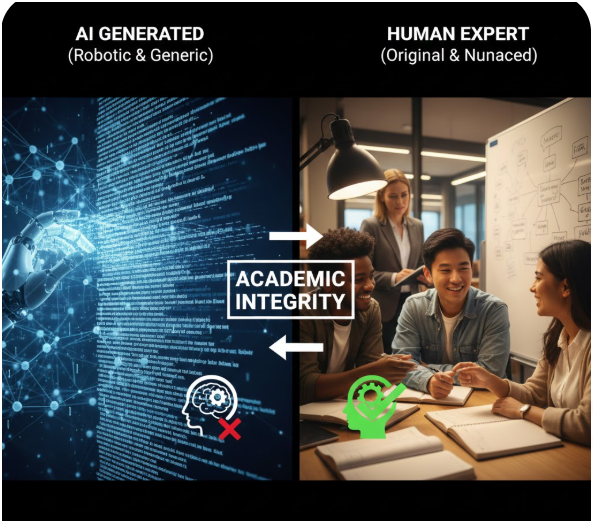
Top students are moving away from robotic, AI-generated content and toward human-expert collaboration. This ensures that the work remains:
- Original: Based on actual research, not predictive text.
- Contextual: Aware of the specific cultural and academic nuances of US universities.
- Ethical: Used as a developmental tool for proofreading, structural feedback, and citation accuracy.
4. Tactical Resource Allocation
Just as a football manager chooses which matches to rotate their squad, a graduate student must choose which assignments require their absolute “peak” performance and which require a “collaborative” approach.
| Task Type | Strategy | Reason |
| Core Research/Lab Work | 100% Individual Focus | This is the “Primary Data”—the heart of the degree. |
| Drafting & Structural Layout | Professional Assistance | Ensures the logic holds up before the final review. |
| Formatting (APA/MLA/Chicago) | Outsourced/Software | Low-value, high-stress task that doesn’t add to “learning.” |
| Peer Review Prep | Collaborative Support | Mimics the real-world publication process. |
5. The Competitive Edge in the US Job Market
The goal of a graduate degree in the US is increasingly professional. Whether the student is aiming for a tenure-track position or a role in Silicon Valley, the quality of their written output is their “calling card.”
A poorly structured dissertation can delay graduation by a year, costing tens of thousands of dollars in lost wages. By investing in professional academic support early, students are essentially buying “insurance” for their careers. They ensure their work is polished, professional, and reflects the true depth of their intelligence—undistracted by grammar errors or poor flow.
Conclusion: Winning the Academic Long-Game
Success in graduate school is a marathon, not a sprint. The “lone scholar” myth—the idea that you must suffer in isolation to be “brilliant”—is being replaced by a more sustainable, team-based approach to education.
By treating academic support services as a “coaching staff,” today’s graduate students are able to maintain their mental health, improve their GPA, and ultimately produce research that makes a real impact. In the high-pressure environment of US higher education, leveraging every available resource isn’t just a shortcut; it’s a championship strategy.
About The Author
Alexander Andeerson is a lead strategist for student success at MyAssignmentHelp, a premier writing service for advanced scholars. He focuses on the “pro mindset” of academia—helping students treat their degrees like high-performance seasons by leveraging professional tools and resources.