

Many website owners spend months focusing on keywords, backlinks, and content updates, yet still struggle to improve rankings. The reason is often much simpler than they expect.
Small hidden problems quietly damage websites every day.
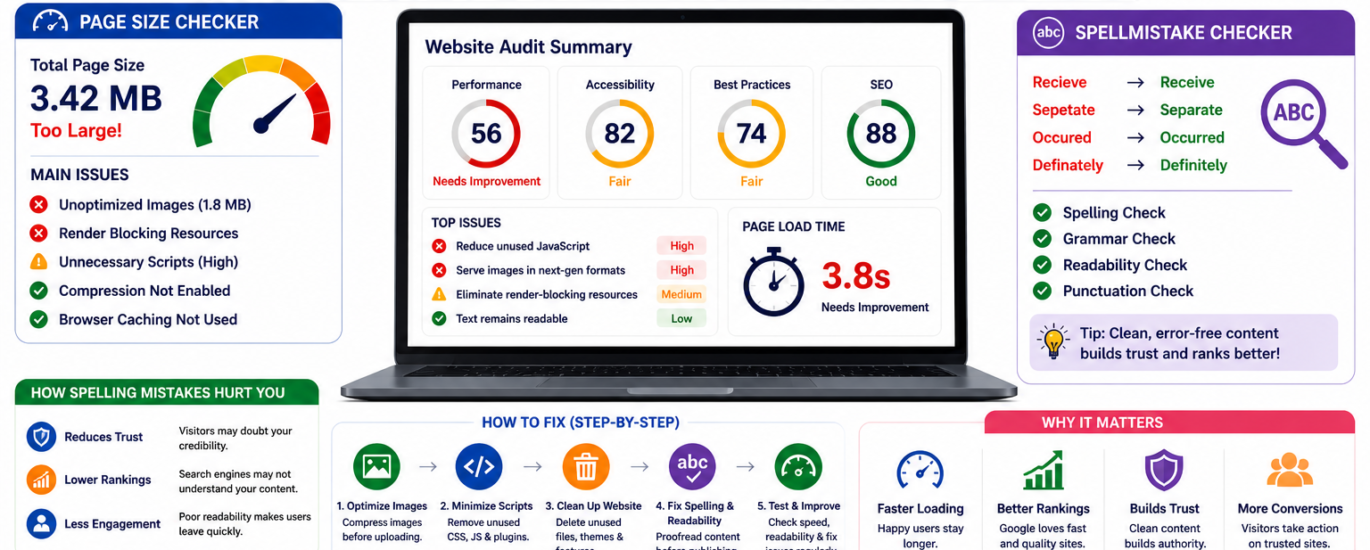
That is why searches for page size checker spellmistake are increasing online. People are starting to realize that oversized pages and spelling mistakes can seriously affect user experience, trust, and SEO performance.
A slow-loading website frustrates visitors before they even read the content. At the same time, spelling mistakes reduce professionalism and make readers question credibility.
Individually, these issues may seem minor. Together, they create a poor website experience that search engines increasingly dislike.
Understanding how these problems work can help website owners improve performance much faster than chasing complicated SEO tricks.
What Does Page Size Checker SpellMistake Mean?
The phrase page size checker spellmistake combines two important areas of website optimization:
- Checking webpage size and loading performance
- Detecting spelling or readability errors
Modern SEO is no longer only about keywords. Search engines now care deeply about how users experience a website.
This includes:
- Loading speed
- Mobile performance
- Content clarity
- Readability
- Website trust
Page analysis tools often measure:
- Total page weight
- Image size
- Script usage
- Loading time
- Mobile responsiveness
Meanwhile, spelling and readability tools help identify:
- Misspelled words
- Grammar mistakes
- Formatting issues
- Awkward sentence structures
When both technical and writing issues appear together, websites usually struggle more in search rankings.
Why Large Page Sizes Hurt Websites
The internet has become extremely fast-paced. Visitors expect pages to load almost instantly.
That is why page size checker spellmistake has become an important SEO topic.
Heavy Pages Create Slow Experiences
Large webpages often contain:
- Oversized images
- Uncompressed videos
- Too many plugins
- Heavy animations
- Excess JavaScript files
These elements increase loading time significantly.
Slow Loading Increases Bounce Rates
Most users leave websites quickly if pages take too long to load.
This leads to:
- Reduced engagement
- Lower conversions
- Frustrated visitors
- Poor SEO signals
Search engines monitor these behaviors carefully.
Why Spelling Mistakes Damage Trust
Many website owners underestimate the impact of spelling errors.
The topic page size checker spellmistake matters because spelling problems affect both readers and search engines.
Visitors Judge Websites Quickly
Users often decide within seconds whether a website feels trustworthy.
Repeated spelling mistakes make websites appear:
- Unprofessional
- Careless
- Poorly maintained
Search Engines Need Clear Content
Search engines analyze language to understand search intent and content relevance.
Too many spelling mistakes can:
- Confuse keywords
- Reduce clarity
- Hurt topical understanding
Poor Writing Reduces Reader Engagement
People stay longer on websites that feel polished and easy to read.
Clean writing improves:
- User trust
- Session duration
- Content readability
Common Reasons Websites Become Slow
Many websites accidentally become oversized because of avoidable mistakes.
Uploading Raw Images
One of the biggest causes of slow websites is uploading high-resolution images directly from phones or cameras.
Too Many Website Plugins
Extra plugins add unnecessary scripts and increase server requests.
Complex Website Themes
Some themes include heavy features most websites never actually need.
Large Background Videos
Videos can dramatically increase webpage size if not optimized properly.
These technical problems quietly grow over time.
Real-Life Examples of Website Problems
To better understand page size checker spellmistake, here are a few practical examples.
Example 1: A Beginner Food Blogger
A food blogger uploads dozens of large recipe images in every article. The site looks visually impressive but loads very slowly on mobile devices.
After using a page size checker, they discover images are causing most of the problem.
Example 2: An Online Clothing Store
An eCommerce website publishes product descriptions quickly without proofreading. Customers notice spelling mistakes and begin doubting product quality.
Example 3: A Small Marketing Agency
A digital agency uses AI-generated blog content without editing it properly. Readers leave quickly because the writing feels repetitive and unnatural.
These situations show how technical and content issues often work together.
How to Check Website Page Size Correctly
Learning about page size checker spellmistake also means understanding how to audit websites properly.
Step 1: Analyze Total Page Weight
Use website performance tools to check:
- Page size
- Load speed
- Mobile performance
- Script usage
Step 2: Optimize Images
Large images are often the biggest performance issue.
Use:
- Compressed files
- WebP format
- Smaller dimensions
Step 3: Proofread Website Content
Review:
- Spelling
- Grammar
- Readability
- Formatting
Step 4: Remove Unnecessary Features
Delete:
- Unused plugins
- Heavy animations
- Extra scripts
Step 5: Test Mobile Speed
Most internet traffic now comes from smartphones, making mobile optimization essential.
Why Readability Is Part of Modern SEO
SEO today is heavily connected to user experience.
That is why page size checker spellmistake searches continue increasing among bloggers and businesses.
Easy-to-Read Content Performs Better
Readers prefer:
- Short paragraphs
- Simple wording
- Organized layouts
Better Formatting Improves Navigation
Using:
- Headings
- Bullet points
- Proper spacing
helps users consume information faster.
Clean Writing Builds Authority
Professional content increases trust and credibility.
This improves:
- Engagement
- Return visits
- Time on page
Practical Ways to Improve Website Speed
If your website feels slow, these simple fixes can help immediately.
Compress Images Before Uploading
Never upload raw image files directly to your website.
Use Lightweight Themes
Minimal themes often perform much better.
Limit External Scripts
Third-party widgets and tools can slow websites heavily.
Enable Browser Caching
Caching improves speed for repeat visitors.
Reduce Font Usage
Too many custom fonts increase loading time unnecessarily.
If your website publishes SEO or blogging tutorials, creating a dedicated Resources section can improve navigation and internal linking.
Why User Experience Controls Rankings Today
The popularity of page size checker spellmistake reflects how SEO itself is evolving.
Search engines now prioritize websites users genuinely enjoy visiting.
Faster Sites Improve Engagement
Speed affects how long visitors stay on pages.
Clean Content Builds Trust
Well-written content feels more authoritative.
Mobile Optimization Matters More
Most modern website traffic comes from smartphones.
Simpler Designs Often Perform Better
Clean layouts improve readability and focus.
Modern SEO combines:
- Speed
- Readability
- Accessibility
- Technical quality
- User experience
into one overall ranking system.
Popular Website Optimization Tools
Many website owners regularly use optimization tools to improve performance.
Common categories include:
- Speed testing tools
- SEO audit platforms
- Grammar checkers
- Readability analyzers
- Mobile usability tools
Using several tools together usually provides better website insights.
People Also Ask
What is page size checker spellmistake?
It usually refers to checking webpage size while identifying spelling or readability issues that may affect SEO and user experience.
Why does webpage size matter for SEO?
Large webpages load slowly, which increases bounce rates and lowers search engine rankings.
Can spelling mistakes hurt SEO rankings?
Yes. Repeated spelling mistakes reduce readability, professionalism, and content clarity.
How can I reduce webpage size?
You can:
- Compress images
- Remove unnecessary scripts
- Limit plugins
- Use lightweight themes
- Optimize videos and media
What tools help detect spelling mistakes?
Grammar and proofreading tools help identify:
- Spelling errors
- Grammar issues
- Formatting mistakes
- Readability problems
The Future of Website Optimization
Website optimization continues evolving quickly.
Successful websites now focus more on:
- Faster loading times
- Better readability
- Cleaner layouts
- Mobile-first design
- Improved user experience
Readers no longer tolerate slow or poorly written websites.
Search engines increasingly reward websites that combine technical performance with high-quality content.
That is why page size checker spellmistake topics continue growing among bloggers, marketers, and online businesses.
Final Thoughts
Understanding page size checker spellmistake is really about understanding modern website quality.
Today, successful websites need:
- Fast loading pages
- Proper spelling
- Clear readability
- Mobile optimization
- Better user experience
Even small improvements can create major long-term SEO benefits.
Whether you run a blog, online store, or business website, focusing on both technical performance and content quality can help your website grow much more effectively over time.