
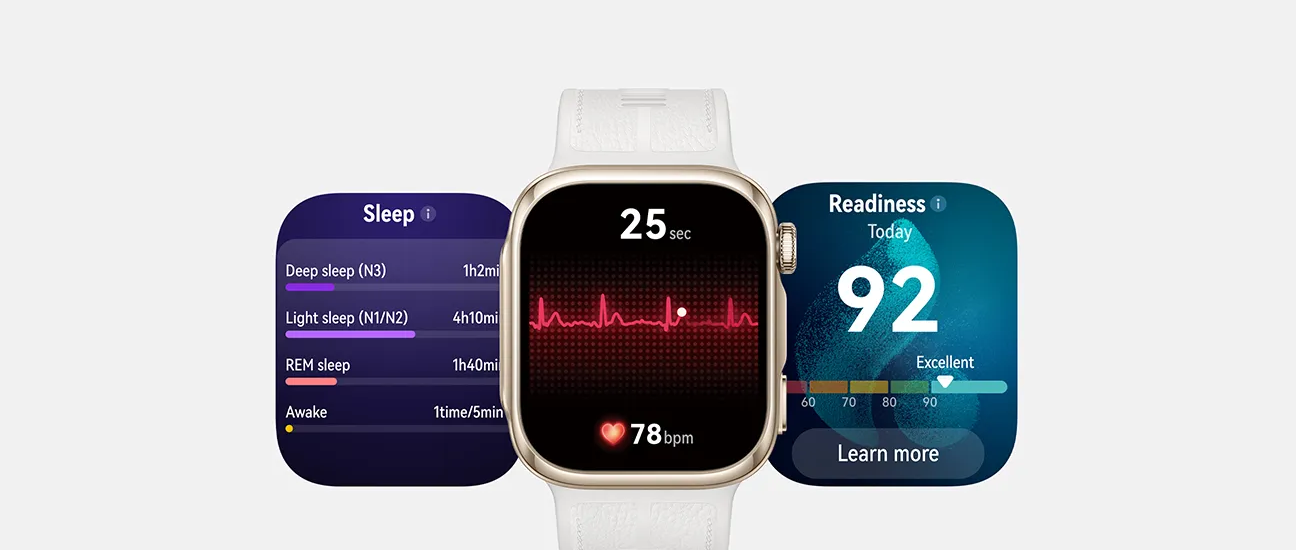
The advice is unambiguous: regular exercise lowers blood pressure. Yet for anyone who has been inactive — particularly anyone already carrying elevated readings — the gap between advice and action yawns wide. Is it safe to start? How hard is too hard? What if something goes wrong mid-session? These questions stall more fitness journeys than laziness ever has. Wrist-worn health monitoring, led by devices like the HUAWEI WATCH D3, answers them with data, transforming an anxious leap into a measured, stepwise progression.
Starting From Where the Body Actually Is
Every safe beginning starts with an honest baseline. A week of morning readings before the first workout documents the resting state; a twenty-four-hour ambulatory monitoring plan adds the full day-and-night picture. For anyone with known hypertension, sharing this baseline with a GP before launching a programme converts guesswork into a professionally informed green light.
The baseline also calibrates expectations. Progress will be measured against personal starting points, not against athletes on social media — a psychological safeguard as important as any physical one.
The Gentle Progression Principle
The body adapts to what it is asked to do — provided the asking stays reasonable. Walking before jogging, shorter sessions before longer ones, moderate effort before intensity: the classic progression works because it allows vessels, heart and joints to adapt in step. Ten minutes of movement daily beats an heroic Sunday hour followed by six days of collapse.
Heart rate zones displayed during sessions keep early efforts honest, confirming that ‘easy’ truly stays easy — the single most common beginner error is accidentally training too hard.
Safety Checks at Both Ends of Every Session
Two quick measurements bracket each workout with reassurance. Before starting, a wrist reading confirms the day is suitable — the watch alerts against intense exercise when pre-session pressure runs high, converting a moment of uncertainty into a clear signal. After finishing, a second reading captures blood pressure after exercise within the two-minute recovery window, documenting how the system handled the effort.
Session by session, these checks build a personal safety record: evidence that the programme is working with the body rather than against it, and early warning if anything drifts off pattern.
Recovering Like It Matters — Because It Does
Adaptation happens between sessions, not during them. Sleep is where the cardiovascular system repairs and strengthens, which makes the TruSleep 5.0 analysis a training tool rather than a curiosity: poor nights predict sluggish sessions, and respecting that signal prevents the overreaching that derails beginners.
The Physical Readiness Score synthesises sleep and recent exertion into a daily go-easy-or-go-for-it signal — an effortless way to match each day’s plan to the body’s actual condition.
The First Four Weeks, Mapped Gently
A sensible opening month asks less than enthusiasm wants to give. Week one might be fifteen minutes of easy movement on alternate days; week four might be thirty minutes of purposeful briskness most days. The increments feel almost trivial — which is exactly why they work. Connective tissue, breathing rhythm and routine all adapt quietly in the background.
The finish of each short session doubles as a measurement ritual: stop, settle the breathing for a moment, and take the reading within the two-minute window while the physiology is still talking. Beginners who build this habit from day one accumulate a baseline that later progress can be judged against — their own, not anyone else’s.
Everyday Movement Counts More Than Perfection
Formal workouts are only part of the beginner’s equation. Stairs taken instead of lifts, errands walked instead of driven, and ten minutes of gardening all feed the same weekly total of movement that resting blood pressure responds to. The body keeps no scoreboard separating ‘exercise’ from ‘activity’; it only notices circulation being used.
This is liberating news for anyone intimidated by gyms. A person who accumulates movement through ordinary life, then adds three short deliberate sessions weekly, is following a programme with genuine physiological teeth. The watch on the wrist counts it all impartially — steps, minutes, intensity — and the trend line rarely cares how the minutes were earned.
Sleep, Stress and the Next-Day Reading
Beginners are often surprised to discover how strongly yesterday’s life shapes today’s numbers. A short, broken night raises resting pressure the following morning; a tense, caffeine-heavy afternoon can echo into an evening session. None of this is failure — it is physiology keeping receipts, and noticing the pattern is the first step toward spending the receipts wisely.
The encouraging corollary is that small repairs compound quickly. A week of consistent bedtimes often shows up in the data as clearly as a week of consistent walks. Pairing movement with sleep hygiene gives beginners two levers in a single programme, and the morning trend line tends to reward the combination generously.
Momentum Through Visible Progress
Beginners quit when progress stays invisible. Tracking solves this: resting readings easing downward, recovery quickening, walking pace climbing at the same heart rate — Health Insights assembles these victories into a visible trajectory. Guided programmes through HUAWEI Health+, graded from beginner level upward, provide structure for the weeks when motivation needs scaffolding.
Understanding the physiology underneath accelerates everything. This specialist guide to blood pressure after exercise explains how effort and recovery shape the numbers — knowledge that turns tentative first steps into confident, informed momentum.